












Original lyrics written by Barry Arthur Cotton.
Foreign language translations created with AI assistance and edited by the author.
Music and vocals generated using AI tools under commercial licenses under platform use terms.
Growing up in Colorado, I witnessed prejudice against the Mexican-American population, many of whom had been in Colorado longer than the founding of America. I abhorred this prejudice, which has stayed with me all my life, and wrote a poem about it that I have now set to music and a video.
I am now retired in Tejas, which rightfully belongs to Mexico and was stolen by the United States during the Mexican-American War.
The history of the upper Río Grande and the Sangre de Cristo country is one of the most misunderstood stories in North America.
Twentieth-century Anglos of Colorado have often dismissed the original settlers of Sangre de Cristo as “Mexicans” when many were descendants of settlers whose roots in the region stretched back centuries before the United States existed, before the Declaration of Independence, and in some cases before the first English colonies on the Atlantic coast had stabilized.
The villages scattered across the Sangre de Cristo Mountains — places like Taos, Chimayó, Truchas, San Luis, Costilla, Tierra Amarilla, and the settlements of the upper Conejos and Culebra valleys — emerged from a long process of frontier colonization under the Spanish Empire and later under Mexico. Their history is not simply “Mexican-American.” It is older, deeper, and more layered than that label suggests.
Spain first established a permanent colonial foothold in the upper Río Grande with the 1598 expedition of Juan de Oñate. The settlers who came north from central New Spain — what is now Mexico — were a mixture of Spanish colonists, mestizos, Indigenous allies, converted Tlaxcalans, and people of blended ancestry already shaped by two generations of life in colonial Mexico. They crossed deserts and river valleys into a harsh northern frontier where survival depended on irrigation, communal labor, livestock, and alliances — sometimes peaceful, sometimes violent — with Pueblo peoples and nomadic tribes.
The northern frontier was poor, isolated, and distant from Mexico City. Yet over centuries, a distinct culture emerged. The people of the upper Río Grande developed a rural Hispano society unlike anything in Europe or Anglo-America. Villages clung to rivers descending from the Sangre de Cristo Mountains. Families farmed narrow strips of irrigated land through acequia systems — communal irrigation ditches inherited from medieval Spain and ultimately influenced by Islamic agricultural traditions of Al-Andalus. Catholicism blended with frontier mysticism, local folk practices, penitente brotherhoods, and deep attachment to land and kinship.
Then came the great trauma of 1680: the Pueblo Revolt. Pueblo peoples rose against Spanish colonial authority and drove the colonists south out of New Mexico. For twelve years, the Spanish presence collapsed. But in 1692, Diego de Vargas reconquered the territory. Afterward, the northern settlements slowly re-emerged, though now more militarized, poorer, and even more isolated.
By the eighteenth century, settlements pushed farther north into what is now southern Colorado. The people who later populated the San Luis Valley and the Culebra watershed were not crossing an international border. There was no United States there. They were moving within the northern frontier of New Spain and later Mexico. The modern border did not yet exist.
When Mexico gained independence from Spain in 1821, New Mexico became part of the Mexican Republic. The people of the Río Arriba — literally the “Upper River” district of northern New Mexico — became Mexican citizens. Yet culturally they remained deeply local and regional. Their villages were worlds unto themselves. Many families spoke archaic forms of New Mexican Spanish that preserved words and pronunciations dating back centuries. In places like the Sangre de Cristo region, old Castilian echoes survived long after they had vanished elsewhere.
Then came the expanding United States.
The nineteenth-century doctrine of “Manifest Destiny” — the belief that the United States was destined to control the continent from Atlantic to Pacific — drove American expansion westward. The Texas Revolution severed Texas from Mexico. The annexation of Texas by the United States further inflamed tensions. In 1846, war broke out between Mexico and the United States.
The Mexican–American War ended in catastrophe for Mexico. Under the Treaty of Guadalupe Hidalgo, Mexico ceded nearly half its territory to the United States — including present-day California, Arizona, New Mexico, Nevada, Utah, and parts of Colorado and Wyoming.
For the people of northern New Mexico and southern Colorado, the border crossed them. They did not migrate into the United States. The United States arrived over them.
One year, they were Mexican citizens living in Mexican territory. Next, they found themselves minorities inside an expanding Anglo-American republic that often viewed them with suspicion or contempt.
This distinction matters enormously.
The Hispano villagers of the Sangre de Cristo Mountains were not newcomers to Colorado. Many Anglo settlers who later looked down upon them arrived generations after these communities were already established. San Luis, founded in 1851, is the oldest continuously occupied town in Colorado. It predates Colorado statehood by a quarter century.
The tragedy is that after annexation, many Hispano landholders lost enormous communal land grants through legal manipulation, language barriers, corruption, and Anglo-controlled courts. Traditional communal grazing lands were fenced or privatized. Wealth and political power shifted rapidly toward incoming Anglo settlers and corporations. By the late nineteenth and twentieth centuries, many descendants of old Hispano families had become laborers, miners, railroad workers, or agricultural workers on lands their ancestors had once governed communally.
This history created deep wounds.
In Colorado, New Mexico, and Texas, prejudice against Mexican-Americans often ignored the reality that many families had roots in the region longer than those of the people discriminating against them. In schools, children were punished for speaking Spanish. In restaurants and businesses across the Southwest, segregation and humiliation were common well into the twentieth century. The old Hispano villages of the Sangre de Cristo region were frequently stereotyped as backward, poor, or “foreign,” despite their centuries-old presence in the land.
Yet culturally, these communities preserved something extraordinary.
They carried forward an ancient rural Hispano culture shaped by Spain, Indigenous America, Mexico, Catholicism, frontier survival, and mountain isolation. Their music, moradas, folk saints, weaving traditions, adobe architecture, oral storytelling, and acequia systems form one of the oldest continuous cultural landscapes in the United States.
The irony is painful: people whose ancestors helped build the oldest European settlements in the interior Southwest were later treated as outsiders in their own homeland.
At the same time, history is complicated, and it is important to hold several truths together. The Spanish and later Mexican settlement of the Southwest itself occurred on Indigenous lands inhabited for thousands of years by Pueblo peoples, Navajo, Apache, Ute, Comanche, and others. Mexico also inherited colonial systems of hierarchy and conquest from Spain. So the story is not a simple morality tale of innocent victims and villains. It is a layered history of empire, migration, conquest, survival, and memory.
My emotional instinct — that many Mexican-American communities in Colorado and New Mexico were profoundly rooted in the land long before U.S. annexation — is historically correct.
When people in the twentieth century mocked “Mexicans” in places like southern Colorado, they were often mocking descendants of families who had lived along the Río Grande and beneath the Sangre de Cristo peaks since before the United States existed at all.
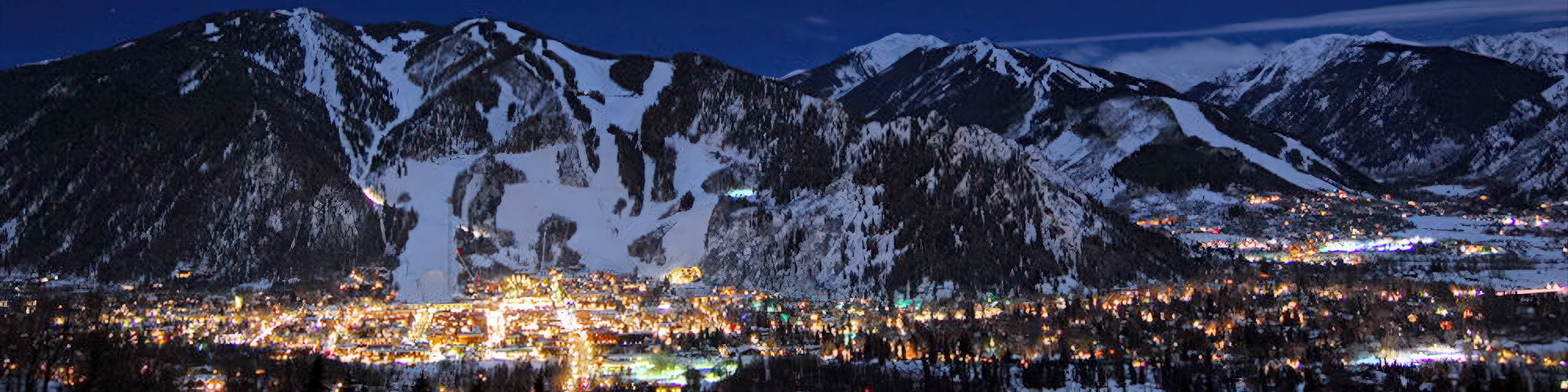
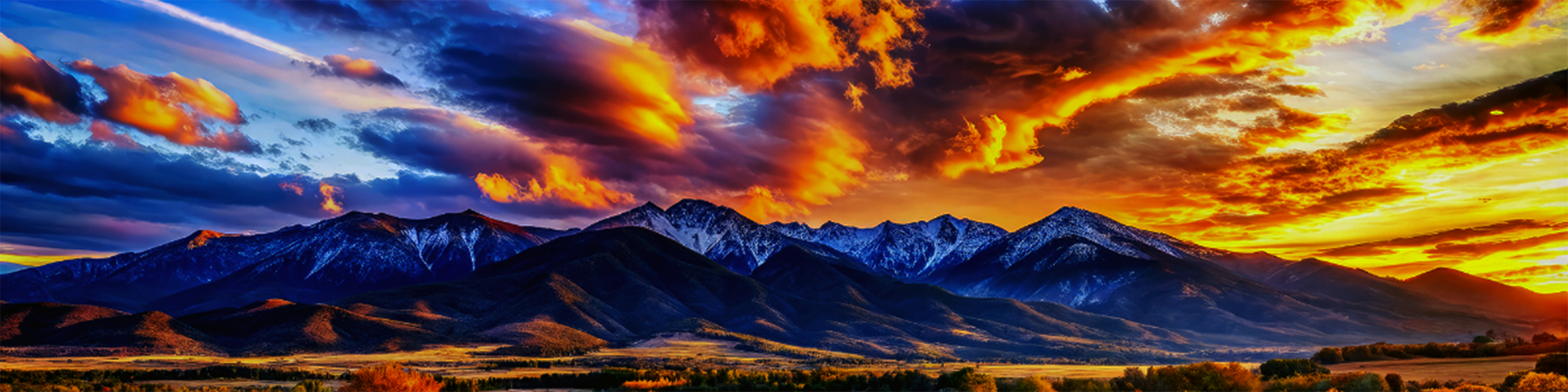
And that memory lingers in the land itself: adobe villages beneath snow-covered mountains, roadside shrines, acequias running beside fields, old Spanish spoken in mountain valleys, and cemeteries filled with names that reach backward through Mexico into Spain and beyond.
The literary tradition of northern New Mexico and southern Colorado is one of the great underappreciated bodies of American regional literature. It is a literature born from isolation, memory, poverty, bilingualism, conquest, land loss, Catholic ritual, mountain landscapes, and cultural endurance. The writers who emerged from the upper Río Grande did not merely “write about Mexicans.” They wrote about a civilization — old Hispano New Mexico — struggling to survive inside modern America.
Among the most important voices were Sabine Ulibarrí, John Nichols, Rudolfo Anaya, Jimmy Santiago Baca, Patricia Preciado Martin, Cleofas Jaramillo, and later writers such as Demetria Martínez and Denise Chávez. Together, they preserved a world that modernization, Anglo expansion, television, highways, and economic displacement nearly erased.
Perhaps no writer captured the emotional texture of old northern New Mexico more gently and authentically than Sabine Ulibarrí.
Ulibarrí was born in 1919 in the tiny village of Tierra Amarilla in Río Arriba County, one of the cultural hearts of old Hispano New Mexico. He grew up hearing Spanish spoken not as a “foreign language,” but as the living language of everyday life — the language of grandmothers, fields, church festivals, folktales, and mountain weather. His childhood belonged to an older rhythm: sheep camps, irrigation ditches, Catholic feast days, adobe villages, and oral storytelling traditions passed from generation to generation.
Then modern America arrived.
Roads improved. English-language schools expanded. Young people left for Albuquerque, Denver, Los Angeles, or military service. The old villages declined. The culture that had endured for centuries suddenly seemed fragile.
Ulibarrí became one of its elegists.
His stories are often quiet, lyrical, nostalgic, and deeply humane. He wrote not with anger so much as mourning. He understood that a whole way of life was disappearing before his eyes.
His most famous works include the collections Mi Abuela Fumaba Puros (“My Grandmother Smoked Cigars”), El Cóndor and Other Stories, and Tierra Amarilla. The very title Mi Abuela Fumaba Puros tells you something essential about his world: old women smoking cigars on porches beneath mountain skies, completely unconcerned with outside expectations. His fiction is filled with shepherds, children, curanderas, wandering old men, irrigation disputes, lonely valleys, and memory-haunted villages.
He was also important politically and culturally because he insisted that New Mexican Spanish and Hispano culture were not broken or inferior versions of “real” American culture. They were authentic historical inheritances with dignity and depth.
The land itself dominates his work. In Ulibarrí, northern New Mexico, it is not a backdrop; it is almost a living spiritual presence. The wind through cottonwoods, the dust of acequia roads, distant church bells, and the smell of adobe after rain all carry emotional and historical meaning.
Then there is John Nichols and the explosive impact of The Milagro Beanfield War.
Published in 1974, the novel became one of the defining literary works about northern New Mexico’s struggle against outside economic power. Though Nichols himself was not Hispanic by birth, he immersed himself deeply in the region’s culture and politics after moving to New Mexico. He recognized that the old Hispano villages were under assault not only culturally but also economically.
The Milagro Beanfield War is both comic and tragic. Set in a fictional northern New Mexican village, it tells the story of poor villagers fighting developers, bureaucrats, and political interests over water rights — the lifeblood of the Southwest. The conflict centers on irrigation water diverted from ordinary people to outside development schemes.
At first glance, the novel feels eccentric and funny: colorful characters, gossip, old trucks, drunken arguments, saints, fiestas, and stubborn peasants. But beneath the humor lies fury. Nichols understood that water in northern New Mexico is not merely property. It is ancestry, survival, and identity.
The acequia is civilization itself.
When developers threaten the water, they threaten the continuation of an entire people.
The protagonist’s tiny beanfield becomes a symbolic act of resistance against the forces consuming old New Mexico: tourism, speculation, political corruption, Anglo capitalism, and cultural erasure.
The 1988 film adaptation by Robert Redford brought national attention to the region and its culture, though many locals felt Hollywood softened some of the deeper political and historical tensions.
Another towering figure is Rudolfo Anaya, often called the father of modern Chicano literature. His masterpiece, Bless Me, Ultima, published in 1972, is perhaps the single most influential novel ever written about New Mexican Hispano identity.
Set during World War II in rural New Mexico, the novel follows a young boy named Antonio as he grows up between competing worlds: Catholicism and folk mysticism, English and Spanish, modern America and ancient village traditions. The mysterious healer Ultima embodies the survival of older spiritual knowledge rooted in the land itself.
Anaya’s work is saturated with the landscape of the Río Grande Valley — juniper, llano winds, rivers, curanderismo, dreams, owls, death rituals, and village gossip. Like Ulibarrí, he wrote about cultural transition and loss, but Anaya’s tone was often more mythic and spiritual.
Meanwhile, poets like Jimmy Santiago Baca brought rawer emotional intensity. Baca’s life was brutal — abandonment, violence, prison, illiteracy — yet he became one of the great poetic voices of the Southwest. His writing burns with anger, survival, dignity, and memory. Though stylistically very different from Ulibarrí, he emerged from the same larger cultural geography shaped by Hispano and Indigenous New Mexico.
Women writers preserved another dimension of the culture.
Cleofas Jaramillo documented traditional customs, recipes, oral traditions, and village life before much of it disappeared. Her works, such as Romance of a Little Village Girl, preserve details of daily Hispanic life that historians often ignore.
Patricia Preciado Martin later collected oral histories from Hispanic women of the Southwest, preserving voices that rarely appeared in official historical narratives.
And beneath all these writers lies a common theme:
The people of northern New Mexico were not immigrants arriving in an already-formed America. America arrived violently, economically, linguistically, and culturally into their world.
That tension defines the literature.
Again and again, these authors return to the same emotional terrain:
— loss of land grants
— erosion of the Spanish language
— outmigration of youth
— disappearance of village life
— commodification of culture for tourism
— conflict over water
— memory of ancestors
— Catholic ritual mixed with folk spirituality
— survival against humiliation and poverty
— dignity rooted in place
The Sangre de Cristo Mountains themselves become almost sacred in this literature. They are not scenery. They are memory-made geological.
There is another irony, too. For decades, mainstream American literature often ignored these writers because they did not fit comfortably into Anglo literary categories. Yet what they preserved may represent one of the oldest continuous European-rooted folk cultures in the continental United States.
Their works are not merely “ethnic literature.”
They are records of a conquered borderland civilization trying not to disappear.